Car Rental Deposits in Thailand and How to Get Them Back
Senior Editor
A car rental deposit in Thailand is money the company blocks on your credit card, or takes in cash, as security against damage and fines. You get it back only after you return the car and the company releases it. For most visitors the right approach is to pay the deposit with a credit card at an international chain, expect a hold somewhere between 5,000 and 50,000 baht for an ordinary car, and budget for that credit to stay unavailable for up to a month.
The deposit affects three decisions: which card you bring, which company you rent from, and what you collect at the counter when you hand the keys back. That last one decides whether you get the whole amount back.
International chains do not usually charge your card. They place a pre-authorization, which reserves part of your credit limit without moving the money. Forum reports name Hertz, Budget and Avis in Thailand as working this way. When the car comes back clean, the company releases the hold. Your card issuer then has to process that release before your available credit recovers.
The two handoffs are why release is slow. A 2026 guide from Itinerary Expert puts the release at 7 to 30 days after a good-condition return. One renter in Hat Yai was told 14 days because the card was issued by a foreign bank. Another reported a multi-week wait with Avis at Phuket Airport, and the refund did eventually arrive.
The hold scales with the car. Itinerary Expert gives these ranges as of 2026: economy 15,000 to 25,000 baht, medium 30,000 to 50,000, premium 80,000 to 150,000. A checklist from operator Sabai Motors quotes lower figures: about 5,000 for a budget car, 6,000 to 10,000 mid-range, and 10,000 to 30,000 for an SUV or luxury car. The two sources disagree, so plan for the higher figure.
Debit cards are the main trap. Itinerary Expert says a credit card is mandatory at nearly all major firms and debit cards are rarely accepted for the hold. In one forum account, a company took a debit card payment to confirm the booking, refused the car at the airport because it was not a credit card, and kept the money.
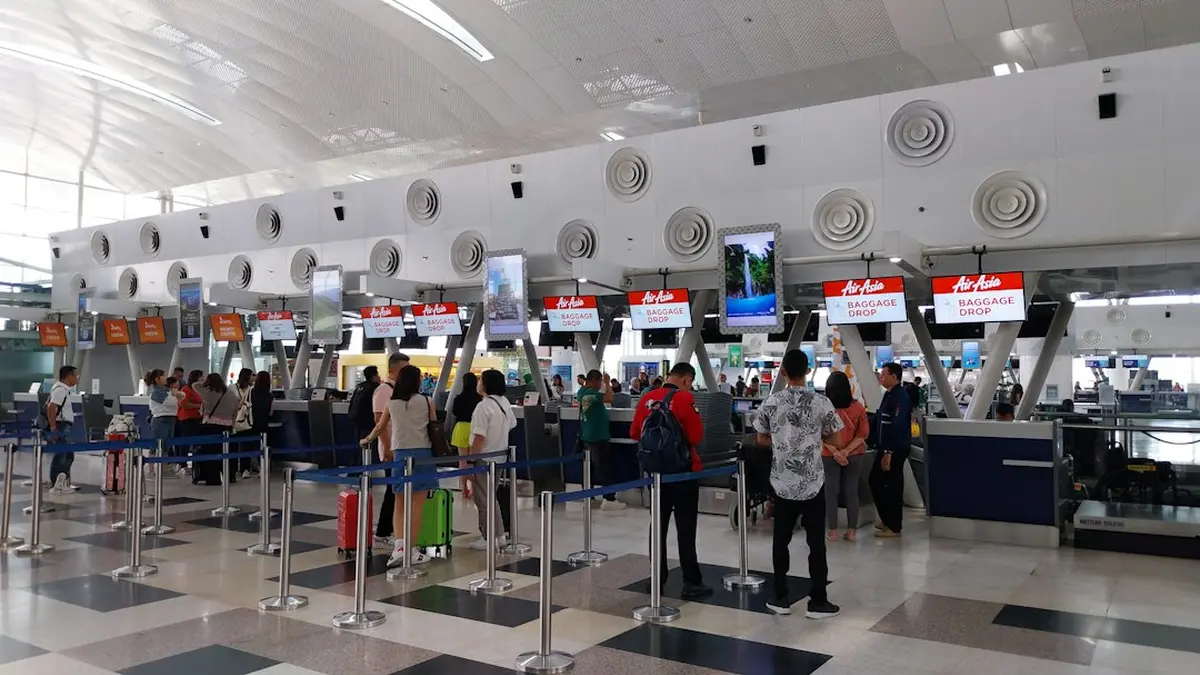
Bangkok. Forum users put international-style agencies at 20,000 to 40,000 baht held, on top of the rental charge. At the local end, Highway Car Rental (Sathorn/Rama IV) asks for 2,000 to 5,000 baht in cash and adds a 2 to 3% surcharge if you pay by card.
Phuket. Refund speed varies more than the amount. A Thailand Rent a Car guide contrasts LuvDrive, which advertises a bank transfer within 15 minutes of return, with Rentacar Phuket, which starts refunds within seven business days, before the payment provider adds its own time.
Chiang Mai and Samui. None of our sources gives car deposit figures specific to these cities, so use the national class ranges above.
Budget, nationally. A compulsory pre-authorization on a major credit card, cited at 5,000 baht.
Local firms often accept cash, which helps if you have no credit card. Itinerary Expert warns that a cash deposit typically runs 2 to 3 times what a card hold would be for the same car. That makes local cash rentals a poor fit if you are carrying limited baht.
Booking platforms have changed what many people pay at the counter. Deposit Index checked 513 live offers across 53 Thai cities on August 31, 2026 and found that all 513 required no deposit at pickup. They collect an online advance at booking instead. Read the voucher anyway, because contracts in that sample still carried deposit terms of 3,000 to 100,000 baht, with a median around 5,000.
| Card hold | Cash deposit | Online advance | |
|---|---|---|---|
| What happens to the money | Reserved on your credit limit, not taken | Handed over in full | Paid at booking |
| How it comes back | Company releases, then your issuer processes it | Handed back or transferred on return | Not refunded; deducted from the rental price |
| Typical user | International chains | Local firms | Online booking platforms |
A deposit is never your original passport. Sabai Motors and Atlas Guide both describe passport retention as illegal, and it gives the shop leverage in any damage argument. Here is what to offer instead.
Deductions are won or lost on evidence you collect at the two handovers. Fraudulent claims for scratches, mirrors and scuffs that were already there run 3,000 to 15,000 baht, according to Atlas Guide. Return day is often a flight day, and shops use that time pressure, so build in slack.
Include existing damage. The timestamps are your proof.
Email or LINE messages are accepted as written proof in a dispute.
Money received, rental charges and any deductions, listed separately.
Do not pay a lump sum on the spot.
If the money does not appear, work out first whether you are waiting on a card hold, a completed charge, cash or a bank transfer, because each is recovered differently. Then send a written refund request through the company's official channel with a deadline. If that fails, file with the OCPB or ask your bank about a card dispute. Neither guarantees recovery. For urgent help on the ground, call the Tourist Police on 1155. A police report is for suspected fraud, not an ordinary deposit disagreement. For small sums, small claims court rarely repays the effort, which is why prevention matters more than escalation.
Many of the same tricks show up with scooters, and they are covered in pickup and return scams.
The full visitor guide compares what Avis, Hertz, Thai Rent a Car, Budget, Sixt and local firms require of a foreign driver.
Read how to rent a car in Thailand
Comments
No comments yet. Be the first to comment!
Leave a Comment